
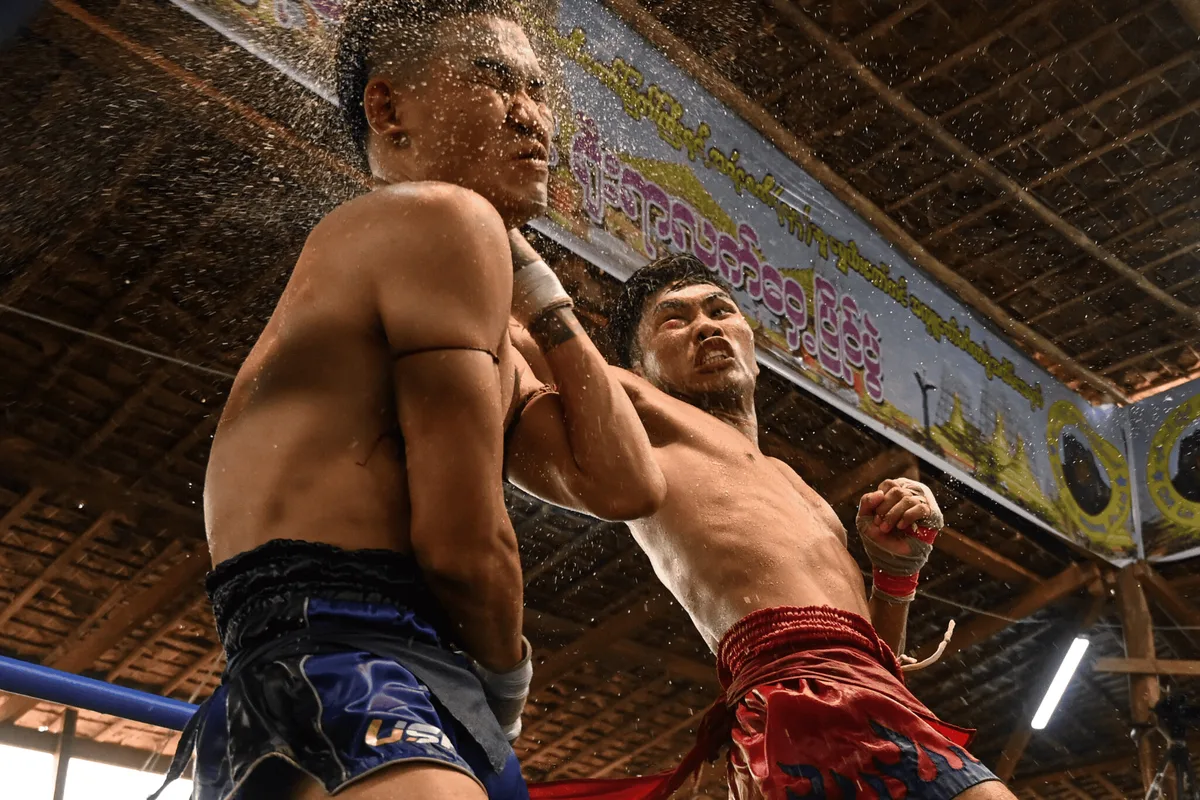
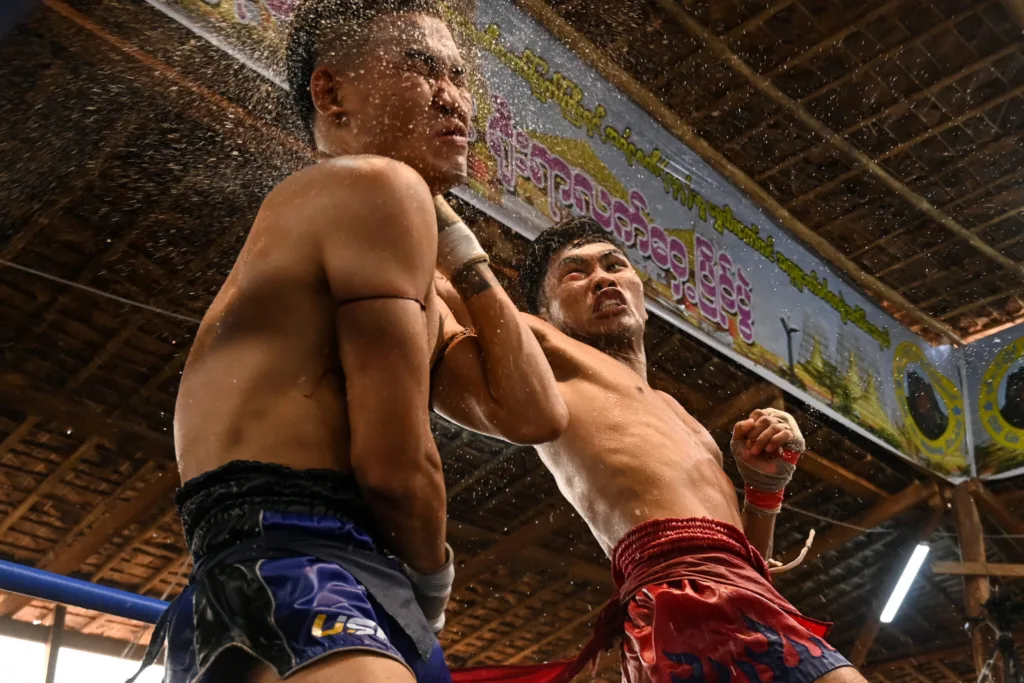
Lethwei, also known as Burmese boxing, is a full-contact combat sport from Myanmar. It's stand-up striking with punches, kicks, knees, elbows and headbutts, and it's considered one of the most brutal martial arts in the world. Like Muay Thai, it allows clinching to control and throw opponents.
Lethwei goes back to ancient times as self-defense and combat training. It's part of Myanmar's cultural traditions and often shows up at festivals and cultural events. Many countries outside Myanmar now have Lethwei clubs and training centers.
The sport has weight classes, official rules, referees and judges. Scoring is based on strikes, knockouts and throws, and fights are divided into rounds.
History of Lethwei
Lethwei originated in Myanmar, formerly Burma. It's also called the "art of nine limbs" because it allows every anatomical weapon: bare fists, legs, elbows, knees and head. It belongs to the umbrella term "Thaing," which covers all the fighting arts in Myanmar, from wrestling to sword fighting.
According to researchers, Thaing can be traced back to the Pagan Kingdom. In ancient times matches were entertainment and popular with every part of society. Any male could take part, noble or commoner. Inscriptions on temple walls in the ancient city of Bagan provide archaeological and historical evidence of Lethwei.
Many people in Myanmar believe Burmese monks developed Lethwei for discipline and self-defense.
During the wars in Myanmar, Lethwei was combat training for soldiers. The royal boxers were highly respected and often fought in front of the king.
Today Lethwei is known outside Myanmar for its brutal and bloody nature, and for its link to Myanmar's history.
Rules and regulations
Rounds and duration
Each fight is five rounds of three minutes, with two minutes of rest between rounds. Round length may vary with the level of the fighters and the event.
Permitted techniques
Lethwei permits all punches, elbow strikes, knee strikes and kicks. Extensive clinching, sweeps and throws are allowed. Feet, hands, knees, elbows and head can all be used.
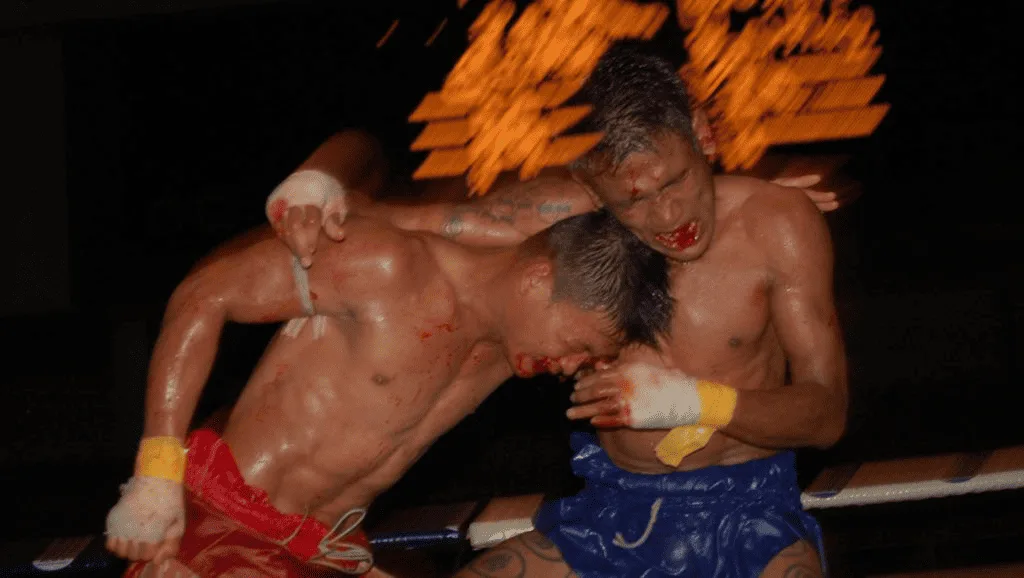
Attire
Fighters wear shorts and no protective gear except groin protection. The shorts must be a soft material that won't injure the opponent.
Weight classes
Fighters are matched by weight and experience.
Referee and judges
Each fight has a referee who enforces the rules and looks after the fighters' safety. Three judges score the fight.
Scoring system
Scoring is similar to other combat sports. Judges score each round on performance, and the fighter with the highest score at the end wins.
Self-defense
Lethwei also stresses blocking, parrying and evading attacks, so fighters can defend themselves and avoid injury.
Stoppage and TKO
If a fighter can't continue because of injury or exhaustion, the fight is stopped and the opponent wins. That's a technical knockout (TKO).
Techniques and training methods
Fighters strike with fists, elbows, knees, feet and head. Training covers conditioning, technique practice and sparring. Unlike Muay Thai or kickboxing, Lethwei fighters wear no gloves and have only a thin layer of gauze over their knuckles. That makes cuts and bruises more likely.
Clinching is a key technique. You grab the opponent's body and control their movement, either to set up strikes or throws. It's an important part of Lethwei's grappling game. Fighters also use throws, chokes and traps for control.
Conditioning means strengthening the hands and shins for bare-knuckle impact and building speed, agility and endurance. Training methods include running, jumping rope, shadowboxing and sparring.
Famous fighters and championships
Dave Leduc is considered one of the greatest Lethwei fighters of all time. He vacated the WLC openweight title in January 2023 and announced in August 2023 that he would retire from professional fighting. He's Canadian and has won multiple championships, including the World Lethwei Championship (WLC).
The World Lethwei Championship was one of the top Lethwei promotions. It drew some of the best fighters in the world and aired on UFC Fight Pass, but it is now defunct, having run from 2015 to 2021.
Lethwei is also celebrated at festivals in Myanmar, where it's known as Burmese boxing or Thaing. These festivals are held around the country and feature the best fighters.
World champions over the years include Tun Tun Min, Too Too and Soe Lin Oo.
You can watch many fights on the World Lethwei Championship YouTube channel.
Protective equipment and gear
Lethwei is bare-knuckle, so fighters wear no gloves or other protective gear during matches. They can wrap their hands with tape and gauze to protect their knuckles and wrists.
Fighters may also wear a groin protector and a gum shield, but neither is required by the rules.
Headbutts are permitted, which raises the risk of injury to both fighters.
Frequently asked questions
What is Lethwei's fighting style?
Lethwei is a full-contact martial art from Myanmar that uses stand-up striking and clinching. It's bare-knuckle with only tape and gauze, and fighters strike with fists, elbows, knees, feet and head. It's closely related to Muay Thai, and the two share many techniques.
What are the 9 limbs of Lethwei?
The parts of the body used to strike: both hands, both elbows, both knees, both feet, and the head.
Where can I find Lethwei classes near me?
It depends on your location, but many martial arts gyms and training centers offer Lethwei. Search online for "Lethwei classes near me."
What gear do I need for Lethwei?
Very little, since it's bare-knuckle. Fighters may wear hand wraps, tape and gauze to protect their hands.
What is the history of Lethwei?
Lethwei goes back to ancient Myanmar. It began as self-defense and was practiced by soldiers in the military. It has since become a competitive sport and is gaining popularity around the world.
Are there any instructional videos for Lethwei?
Yes, plenty online. Learning from a qualified instructor is still the better route for proper technique and safety.