
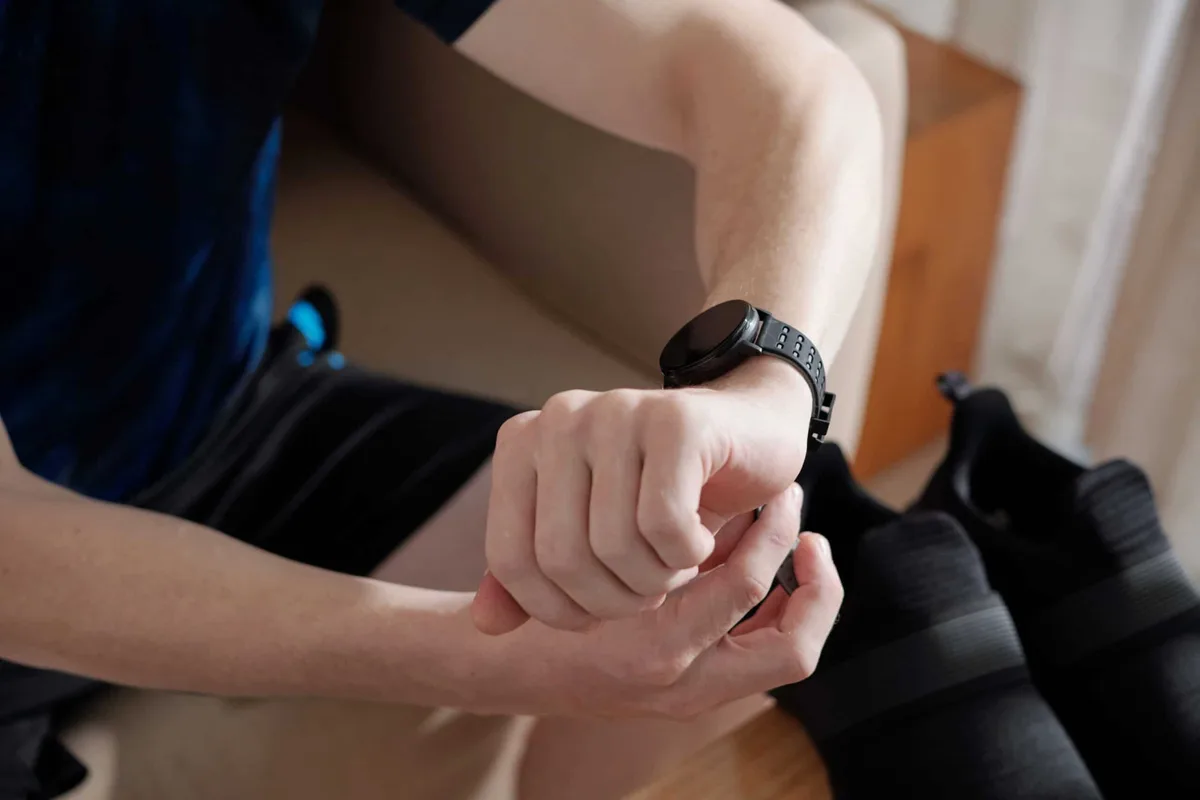
Most fighters don’t need a tracker. A few should have one. If you want honest heart rate data from boxing rounds or hard rolling, the Polar H10 chest strap at $89.21 is the one to buy, because it’s the only option here that stays accurate when your arms are moving fast. Prices below are current as of November 2026.
The catch is that your wrist is the worst place to measure a boxer. You’re clenching, hitting and sweating, and you’re probably wearing wraps and gloves on top.
The best fitness trackers for boxing, MMA and BJJ in 2026
We picked these from each maker’s published specs and prices, plus how they fit real combat sports training. We haven’t lab-tested them. Every price links to the maker’s own page.
1. Polar H10: best fitness tracker for accurate heart rate
Polar H10
- ECG chest strap
- Up to 400h battery
- Water resistant to 30m
- Records one session offline
The H10 sits under your shirt on a chest strap and reads the electrical signal from your heart, like an ECG. Polar’s own pitch is that this beats wrist sensors in high-intensity work with a lot of arm movement. It also keeps one session in memory, so you can leave your phone in the locker, and it pairs with most watches and gym apps over Bluetooth and ANT+.
It tracks heart rate and nothing else, so no sleep, no recovery score. Some people also dislike a strap on the chest, and if it slips off the right spot you need to readjust to fix the reading. Polar lists it at $104.95 and showed $89.21 when we checked.
2. WHOOP One: best fitness tracker for recovery
WHOOP One
- WHOOP 5.0 band included
- 14+ day battery
- Strain, sleep and recovery scores
- Membership, not a one-off buy
WHOOP has no screen to smash. It’s a band that tracks strain, sleep and recovery around the clock, with a battery that lasts 14+ days according to the maker. That’s why it’s popular with grapplers and anyone in a hard camp: it tells you whether to push or back off, without a display for a gym partner to catch.
The cost is the membership. WHOOP One is $199 a year, the Peak tier is $239, and the band comes with the membership rather than as a separate purchase. It also won’t show your heart rate during a round, so it’s a recovery tool, not a live coach.
3. Garmin Forerunner 165: best watch for the money
Garmin Forerunner 165
- Touchscreen display
- Up to 11 days battery
- Training metrics
- No subscription
The 165 is a proper training watch with a bright touchscreen, up to 11 days of battery and no subscription. Garmin lists it at $249.99 and showed $199.99 when we checked. It’s the watch we’d buy a fighter who wants to see live heart rate on pads, count conditioning rounds and check recovery, without paying Apple prices.
It’s a running watch first, so don’t expect boxing-specific modes. And like every wrist sensor, its heart rate readings will drift when your arms are moving hard. For sparring, take it off.
4. Apple Watch SE 3: best for iPhone users
Apple Watch SE 3
- Up to 18 hours battery
- Water resistant 50m
- Sleep and HRV tracking
- Needs iPhone 11 or later
If you already carry an iPhone, the SE 3 does the job for $249, and it’s water resistant to 50m with sleep tracking and HRV. The aluminum case and the 44mm option at $279 give you a big, bright screen to read between rounds.
Battery is the weakness. Apple lists up to 18 hours, so you’ll charge it daily, which is a real hassle if you also want it for sleep. It only works with iPhone. It also has a glass-and-aluminum body that doesn’t belong near a sparring partner’s face.
Fitness trackers compared
| Tracker | Price | Where it sits | Battery | Best for |
|---|---|---|---|---|
| Polar H10 | $89.21 | Chest | Up to 400h | Accurate heart rate in rounds |
| WHOOP One | $199/yr | Wrist band | 14+ days | Recovery and sleep |
| Garmin Forerunner 165 | $199.99 | Wrist | Up to 11 days | All-round watch, no subscription |
| Apple Watch SE 3 | $249 | Wrist | Up to 18 hours | iPhone owners |
Can you wear a fitness tracker for sparring or rolling?
Mostly no, and it’s the question that decides what to buy. A watch under a boxing glove is a bad idea: it can damage the glove, the watch and your wrist. In BJJ and wrestling, a hard watch face scratches your partner and can get torn off in a scramble. Most gyms ask you to remove watches for partner work anyway.
That leaves two good setups. Wear a chest strap for sparring, since it stays out of the way under a rash guard, or wear a band like WHOOP and keep it for recovery. Use a watch for bag work, pads, running and strength sessions. If you train at a boxing gym or an MMA club, ask the coach before you wear anything on your wrist. You can browse clubs in our gym directory.
Which metrics matter for combat sports?
Most tracker numbers don’t help fighters. A few do.
- Heart rate during rounds. The one number worth paying for. It tells you if you’re in the right zone for a conditioning session, and how fast it drops between rounds. Our cardio workouts for MMA guide shows what those zones look like in practice.
- Heart rate recovery. How quickly your pulse falls after a hard round. It’s a better fitness marker than your resting rate.
- HRV and sleep. Useful for deciding when to train hard, especially in a fight camp or when you’re cutting weight. They are trend numbers, so look at a week, not one night. Pair them with sound fighter nutrition.
- Calories burned. Ignore it. Every tracker guesses, and a boxing round isn’t a jog.
- Steps. Irrelevant, unless you’re running. Our guide on building endurance without running covers the alternatives.
Which tracker should you buy?
- You spar or roll hard and want real numbers: Polar H10.
- You want to know when to rest: WHOOP One, if you can stomach a yearly fee.
- You want one watch for everything: Garmin Forerunner 165, or the Apple Watch SE 3 if you’re all-in on Apple.
- You’re on a tight budget: The H10 is the cheapest option here and the only one with no subscription, no charging and no screen to break. Pair it with your phone’s free app.
A tracker won’t make you fitter. Good training and sleep do that, and the tracker just shows whether they’re working. If you also need gear, see our best boxing gloves.