
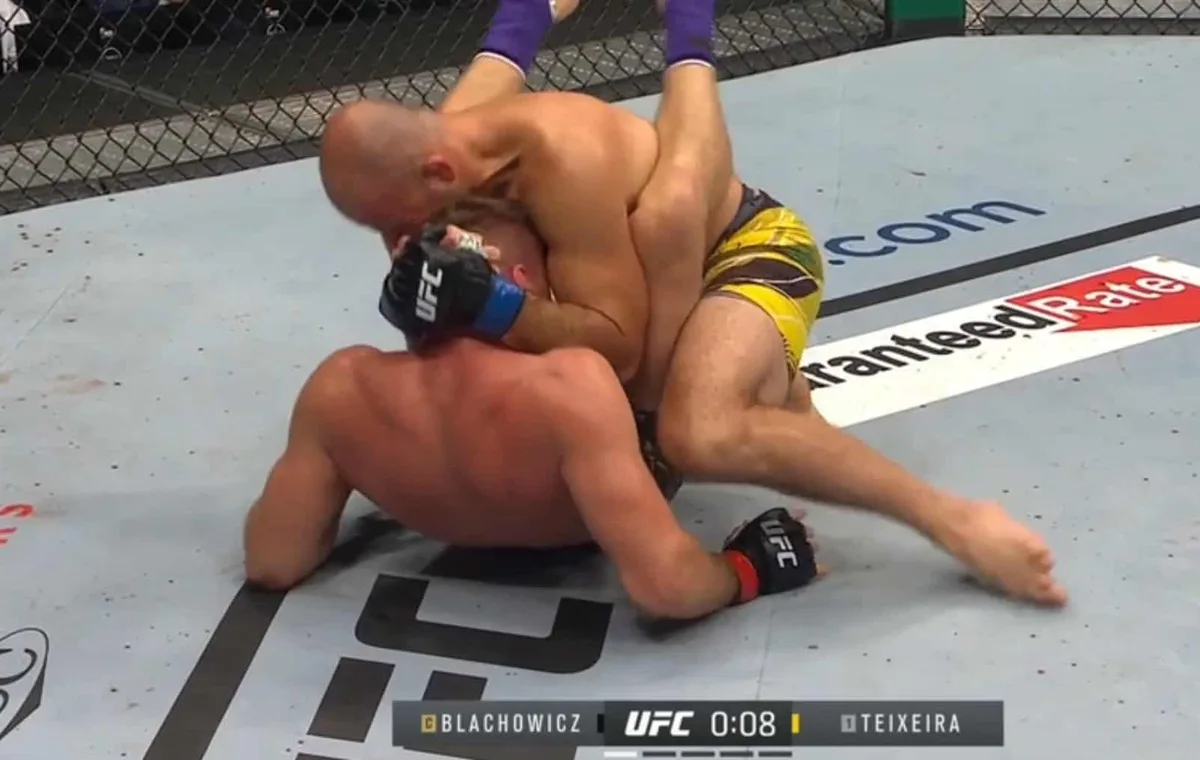
The can opener is a spinal lock used to force an opponent to open their closed guard. It puts pressure on the neck and spine, which makes it effective and controversial in Brazilian jiu-jitsu (BJJ). You should know it both to use it and to defend it.
You grip your opponent's collar or head with both hands, pull their head toward you and push their body away with your legs. It may not be legal in every grappling competition because of the injury risk.
How the can opener works
The can opener is typically applied from the guard. Grip the collar or head with both hands, pull the head toward you and push the body away with your legs. That creates a lever that loads the neck and spine.
It's a neck crank, so it works through pain. The pressure often forces the opponent to open their closed guard.
There are several variations. Some lean more on the crank, others on leverage and control. Try a few and see which suits your game and body type.
The downsides are real. The pressure can injure your partner's neck and spine, so apply it carefully. And while you attempt it, you can leave yourself open to a counter. Skilled BJJ practitioners will use the opening to pass your guard or set up their own submissions.
Is the can opener dangerous?
Yes. Neck cranks like the can opener carry a higher risk of spine and neck injury than most other submissions. Neck cranks like the can opener are restricted or banned under many competition rulesets, so check yours.
The most common injuries are spinal damage such as herniated discs, and neck injuries. They can be severe and take a long time to recover from. The line between a safe can opener and a dangerous one is thin.
Practise it under an experienced instructor, and tap early if you're caught in one.
Defending against the can opener
Guard positioning
In closed guard, keep your legs wrapped tightly around your opponent's waist and squeeze with your thighs. That makes the can opener harder to apply. Hold a strong grip on their collar or arms to control their posture.
Breaking grips
When your opponent reaches for your head or collar, break the grip quickly. One way is the two-on-one grip break: grab their wrist with both hands and pull it away from your head to create space.
Counters and escapes
One counter is to pull their head toward you while pushing their body away with your legs, which can take pressure off your own neck and spine.
There are three advisable escapes: bridge and roll your opponent over, slide your head out from under their grip, or transition to another dominant position such as the armbar.
The can opener in competition and MMA
Gi and no-gi
In gi and no-gi grappling, the can opener is mostly a way to break a closed guard. It may not be the most technical guard break, but it works. Rules vary by competition, so check your event's.
MMA
In MMA the can opener is used less as a submission and more as a tool to set up other techniques. Since both fighters are usually competent at defensive grappling, finishing with it is unlikely.
Training safely
Use a trusted training partner who knows the technique and can give feedback. Tell your partner at once about any discomfort or pain.
- Warm up properly before practising the can opener, to increase blood flow and prevent strains.
- Keep your head neutral and avoid bending or twisting your neck excessively.
- Stop immediately if you feel pain or discomfort, and re-evaluate your technique.
Rules vary between organisations, so read the ruleset and forbidden techniques before you enter. Using a disallowed technique can mean disqualification, or an injured opponent.
Other submissions in BJJ
Arm bars and chokes
The arm bar is one of the most popular submissions. It's a joint lock that hyperextends the elbow, and you can hit it from mount, closed guard, side control and knee on belly.
The kimura targets the shoulder joint, as does the omoplata. The bulldog choke can be used to control the neck and limit your opponent's mobility.
Leg locks
The heel hook applies rotational force to the ankle and knee, and it's often restricted in competition. The kneebar pressures the knee joint by extending the leg. It's similar to an arm bar but executed on the leg.
Training them
Drill different techniques with your training partners, and keep a balance between arm bars, chokes, leg locks and the rest.
Frequently asked questions
What are the risks of using the can opener neck crank?
The main risk is to your opponent: severe neck injury such as intervertebral disc damage, muscle strains or ligament sprains. Be careful in training, since the line between a safe and dangerous can opener can be thin.
Which BJJ submissions are similar to the can opener?
The can opener is a neck crank. Other neck cranks and spinal locks carry the same kind of risk, which is why rulesets restrict them.
Is the can opener technique considered legal in BJJ competitions?
It's often classified as a "spinal lock" or "neck crank," which many rulesets prohibit. Rules vary by competition, division and age group, so check the rules of your event.
How does the can opener submission relate to other grappling techniques?
Neck cranks are the category of techniques that target the cervical spine. They can be simple to understand, but they take proper execution to avoid injury. The can opener is often used as a setup for other submissions and may help you gain positional advantage.
What are some common setups and transitions from the can opener submission?
Can opener pressure may force the opponent to open their guard, letting you pass or attempt other submissions like the armbar or triangle choke.